Family Fish Breed Guide
Compare 14 aquarium fish with sourced references: FishBase maximum length, temperature and pH for every species, plus PetMD lifespan and tank size.
Data last maintained

Family Fish Breed Guide
Compare 14 aquarium fish with sourced references: FishBase maximum length, temperature and pH for every species, plus PetMD lifespan and tank size.
Data last maintained
Breed Pick Guide
Lays out 14 aquarium fish by maximum length and water temperature; every band follows the figure or class FishBase gives.
- Small
- Medium
- Large
Each bar runs from 0 to the maximum length FishBase records.
Maximum length, water temperature and climate come from FishBase species pages; the bronze corydoras stands in for its genus and the goldfish figures are records for the wild species, as the details note. They describe the species in general, not any individual fish. “View details” on each card lists the source of every item.
Meet the fish · 1/3
What this table shows
14 aquarium fish, each item with its source and review date. This only lines up the maximum length and water temperature FishBase gives; it does not judge which fish is better.
Maximum length, temperature, pH and climate all come from FishBase species pages. The betta, goldfish, guppy, neon tetra, molly and cherry barb also have PetMD care sheets for lifespan, tank size and keeping temperature; 4 of them use a sheet for a group of related fish, which the details note.
Each species’ details also list pH, lifespan and tank size; items the sources leave out are not filled in.
The next two pages look at maximum length and water temperature.
These are species-level ranges from the sources, not guarantees for an individual fish or a substitute for cycling and testing your own tank. Confirm separately according to your setup.
14 fish breeds
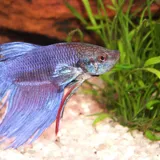
Betta (Siamese fighting fish)
Native to the Mekong basin, it lives in the still waters of floodplains, canals and rice paddies; it breathes air and builds bubble nests, and males fight each other. FishBase notes its many colorful varieties are popular aquarium fish.
- Maximum length
- ≤ 6.5 cm
- Temperature range
- 24–30 °C
- pH range
- pH 6–8
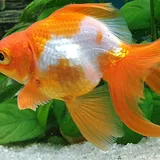
Fancy Goldfish (Ryukin/Oranda)
The wild species is native to East Asia, in China and Japan, and has been introduced around the world; FishBase records cultured forms in scarlet, red-pink, silver, brown, white, black and combinations of these colors. PetMD calls goldfish one of the most recognizable types of pet fish.
- Maximum length
- ≤ 48 cm
- Temperature range
- 0–41 °C
- pH range
- pH 6–8
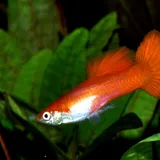
Guppy
Native to Venezuela, Barbados, Trinidad, northern Brazil and the Guianas in South America, and widely introduced elsewhere, mainly for mosquito control; the English name honors Robert John Lechmere Guppy, a British-born civil engineer. FishBase calls it one of the most popular aquarium fishes, with many standardized varieties.
- Maximum length
- ≤ 6 cm
- Temperature range
- 18–28 °C
- pH range
- pH 7–8
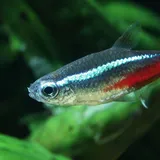
Neon Tetra
Native to blackwater and clearwater stream tributaries of the Solimões River in South America; FishBase calls it the most popular aquarium fish. Its species name, innesi, honors the American publisher and aquarist William Thornton Innes.
- Maximum length
- ≤ 2.5 cm
- Temperature range
- 20–26 °C
- pH range
- pH 5–7
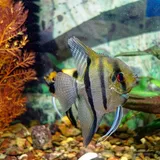
Angelfish
Native to the Amazon basin in Peru, Colombia and Brazil; its body is compressed and disc-shaped, silvery with dark vertical bars (7 in juveniles, 4 in adults). The genus name Pterophyllum joins the Greek words for fin and leaf, apparently for its tall triangular dorsal fin.
- Maximum length
- ≤ 10.5 cm
- Temperature range
- 24–30 °C
- pH range
- pH 6–8
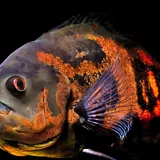
Oscar
Native to the western Amazon and Orinoco basins in South America; it has a large mouth with thick lips and a dark body with bright orange on the gill-cover edge and lower sides, often with a black, orange-ringed spot at the base of the tail. FishBase also records it as a highly esteemed food fish in South America.
- Maximum length
- ≤ 45.7 cm
- Temperature range
- 22–25 °C
- pH range
- pH 6–8
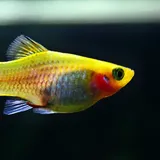
Platy (Xiphophorus maculatus)
Native to North and Central America, from Veracruz in Mexico to northern Belize; FishBase records its use in genetic research and several popular color varieties. The genus name Xiphophorus means “sword-bearer” in Greek, but FishBase notes that the male platy's tail fin is not drawn out into a sword.
- Maximum length
- ≤ 6 cm
- Temperature range
- 18–25 °C
- pH range
- pH 7–8
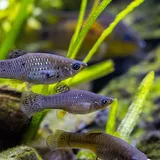
Molly (Poecilia sphenops/latipinna)
Poecilia sphenops is native to Central and South America, from Mexico to Colombia, in both fresh and brackish water; FishBase notes the black variety, the black molly, is a very popular aquarium fish marketed throughout the world. PetMD says mollies come in many colors and patterns.
- Maximum length
- ≤ 7.5 cm
- Temperature range
- 18–28 °C
- pH range
- pH 7.5–8.2
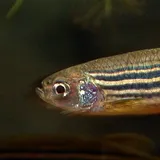
Zebra Danio (Zebrafish)
Native to Pakistan, India, Bangladesh, Nepal, Myanmar and Bhutan in South Asia; five even horizontal stripes run along each side to the end of the tail fin, and the anal fin is striped too. FishBase records it as a model organism for developmental biology, and it is often used for mosquito control.
- Maximum length
- ≤ 3.8 cm
- Temperature range
- 18–24 °C
- pH range
- pH 6–8
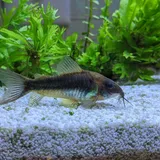
Corydoras Catfish
Here the bronze corydoras stands in for the genus. It is native to South America, from Colombia and Trinidad to the La Plata basin east of the Andes; its body is yellow or pink with a white belly and blue-grey head and back, usually with a brownish-orange patch just before the dorsal fin. It can breathe air through its gut, and adults stay in schools of 20 to 30.
- Maximum length
- ≤ 7.5 cm
- Temperature range
- 25–28 °C
- pH range
- pH 6–8
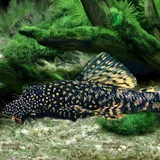
Bristlenose Pleco (Ancistrus)
Ancistrus cirrhosus is native to the Paraná River basin in South America and lives in streams, from very turbid still water over clay to clear running water over gravel; FishBase lists it as an algae-eater. The genus name Ancistrus comes from the Greek word for hook.
- Maximum length
- ≤ 9.1 cm
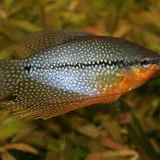
Pearl Gourami
Native to the Malay Peninsula, Thailand and Indonesia (Sumatra and Borneo), where it lives in lowland swamps with acidic water; it must breathe air, and the male guards the bubble nest. FishBase lists its IUCN status as Near Threatened.
- Maximum length
- ≤ 12 cm
- Temperature range
- 24–28 °C
- pH range
- pH 6–8
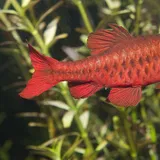
Cherry Barb
Native to the Kelani to Nilwala basins of Sri Lanka, mostly in heavily shaded streams and rivulets; FishBase notes the more colorful varieties may be overfished for the aquarium trade and lists its IUCN status as Vulnerable.
- Maximum length
- ≤ 5 cm
- Temperature range
- 23–27 °C
- pH range
- pH 6–8
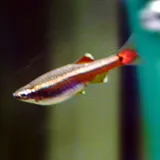
White Cloud Mountain Minnow
Native to China and Viet Nam, and FishBase's distribution notes say it is thought to be extinct in the wild; its body is green with a golden band along the middle of each side, dark lines above it, and large red round spots at the base of the tail fin. The genus Tanichthys honors Tan Kam Fei, a Chinese scout leader who discovered and collected the first specimens in 1932.
- Maximum length
- ≤ 4 cm
- Temperature range
- 18–22 °C
- pH range
- pH 6–8
About the aquarium fish comparison table
Compare species ranges and tank needs
Every species has a FishBase maximum length and, for all but one, FishBase temperature and pH ranges. Species with a PetMD care sheet also show lifespan, minimum habitat and keeping temperature. Use these facts to identify what to confirm before adding a fish, not as a compatibility guarantee.
Search species and water needs
Search species names and water references. The size filter follows the FishBase maximum length, which is the largest recorded specimen rather than the usual aquarium size. There are no energy or shedding filters because the sources do not score those for fish.
Reference only, not a stocking decision
This guide is not veterinary advice, a compatibility guarantee, or a substitute for cycling and testing your own aquarium. Confirm tank mates, water parameters and local rules before adding a fish.
FAQ
Common questions and answers about this topic.
What is Family Fish Breed Guide?
A sourced reference for 14 common aquarium fish with FishBase maximum length, temperature and pH ranges for every species and PetMD lifespan, minimum habitat and keeping temperature where a care sheet exists, each with review dates. It does not guarantee compatibility or replace testing your own tank.
Is Family Fish Breed Guide free to use?
Yes, Family Fish Breed Guide is completely free to use.
Data Sources
This tool's data is compiled from the authoritative sources below.
Data last maintained