Family Cat Breed Guide
Compare 27 cat breeds with sourced living references: coat length, weight, lifespan, grooming, shedding and chattiness, each with source and review date.
Data last maintained

Family Cat Breed Guide
Compare 27 cat breeds with sourced living references: coat length, weight, lifespan, grooming, shedding and chattiness, each with source and review date.
Data last maintained
Breed Pick Guide
Lays out 27 cat breeds by coat length and grooming, shedding and weight; every level is the one the source gives.
Longhair
Shorthair
Longhair and shorthair
Coat length is the Cat Fanciers’ Association (CFA) classification; grooming, shedding and weight come from VCA Animal Hospitals’ breed profiles, and for the two breeds VCA does not profile (Munchkin, Oriental Shorthair) from The International Cat Association (TICA) breed pages. They describe the breed in general, not any individual cat. “View details” on each card lists the source of every item.
Meet the cats · 1/4
What this table shows
27 cat breeds, each item with its source and check date; this only lines up the levels the sources give and does not judge which breed is better.
Coat length follows the Cat Fanciers’ Association (CFA) breed classification; grooming, shedding and weight use the scores and weight ranges in VCA Animal Hospitals’ breed profiles. Munchkin and Oriental Shorthair, which VCA does not profile, use The International Cat Association (TICA) breed pages, and their details say so.
Scores run from 1 to 5 and are turned into a few levels here (low, moderate, high); how each is converted is explained under each chart.
How vocal a breed is and whether it likes to sit on laps also have source scores; they appear only in each breed’s details, not as charts.
These are breed-level classifications and scores from the sources, not guarantees for an individual cat. Confirm separately according to age, health and individual circumstances.
27 breeds
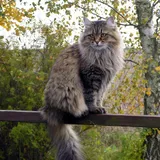
Siberian
Considered the national cat of Russia, it has a recorded history in its homeland going back to around the year 1000, when it was kept mainly by farmers and tradespeople. The Cat Fanciers’ Association describes its personality as “Dog-like, intelligent and devoted”.
- Coat length
- Longhair
- Grooming
- High
- Shedding
- High
- Size
- Large
- Adult weight range
- 12–20 lb (5.4–9.1 kg)
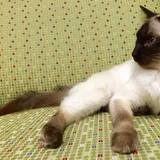
Balinese
Long-haired kittens turned up in Siamese litters as far back as the early 1900s; in the 1940s, two Siamese breeders began developing them into a separate breed. The Cat Fanciers’ Association describes its personality as “Vocal, affectionate, active”.
- Coat length
- Longhair
- Grooming
- Low
- Shedding
- Minimal shedding, not zero
- Size
- Small
- Adult weight range
- 5–8 lb (2.3–3.6 kg)

Devon Rex
In 1959, a curly-haired male kitten turned up in a litter born in a garden in Devon, England; the breed descends from him and his offspring. The Cat Fanciers’ Association describes its personality as “Pixie like and personality”.
- Coat length
- Shorthair
- Grooming
- Low
- Shedding
- Minimal shedding, not zero
- Size
- Medium
- Adult weight range
- 7–12 lb (3.2–5.4 kg)
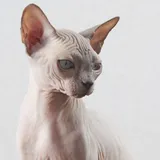
Sphynx
It comes from a spontaneous mutation that first appeared in 1966, when a domestic cat in Toronto, Canada, gave birth to a hairless kitten. The Cat Fanciers’ Association describes its personality as “Active, affectionate”.
- Coat length
- Shorthair
- Grooming
- Low
- Shedding
- Minimal shedding, not zero
- Size
- Small
- Adult weight range
- 8–10 lb (3.6–4.5 kg)
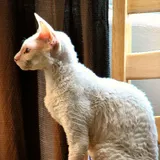
Cornish Rex
In 1950, barn cats on a farm in Cornwall, England, produced a curly-coated male kitten; the breed’s distinctive coat began with that mutation. The Cat Fanciers’ Association describes its personality as “Active, racy, affectionate”.
- Coat length
- Shorthair
- Grooming
- Low
- Shedding
- Minimal shedding, not zero
- Size
- Small
- Adult weight range
- 6–8 lb (2.7–3.6 kg)

Russian Blue
It is believed to have originated in the Archangel Isles of northern Russia; today’s Russian Blue was produced after World War II by U.S. breeders who imported cats from Europe and combined English and Scandinavian bloodlines. The Cat Fanciers’ Association describes its personality as “Graceful, playful and quiet”.
- Coat length
- Shorthair
- Grooming
- Low
- Shedding
- Low
- Size
- Medium
- Adult weight range
- 7–13 lb (3.2–5.9 kg)

Scottish Fold
In 1961, a shepherd spotted the first Scottish Fold, a white female named Susie, on a farm in the Tayside region of Scotland; the breed was established from her descendants. The Cat Fanciers’ Association describes its personality as “Affectionate and laid back; sweet expressions”.
- Coat length
- Longhair and shorthair varieties
- Grooming
- Moderate
- Shedding
- Moderate
- Size
- Medium
- Adult weight range
- 6–13 lb (2.7–5.9 kg)
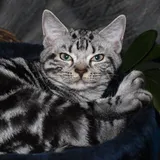
American Shorthair
It arrived in North America with the early settlers, on ships that kept cats to control rodents, and moved west with the pioneers, keeping farms and homes free of vermin. The Cat Fanciers’ Association describes its personality as “Even temperament”.
- Coat length
- Shorthair
- Grooming
- Moderate
- Shedding
- Moderate
- Size
- Medium
- Adult weight range
- 8–12 lb (3.6–5.4 kg)
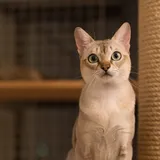
Singapura
Classified as a natural breed and considered a “living national monument” in Singapore, it is believed to have come from local street cats; in 1975, two Americans who had been working in Singapore brought five back to the U.S., founding the breed. The Cat Fanciers’ Association describes its personality as “Sweet, demanding, affectionate and occasionally bossy”.
- Coat length
- Shorthair
- Grooming
- Low
- Shedding
- Minimal shedding, not zero
- Size
- Small
- Adult weight range
- 4–8 lb (1.8–3.6 kg)
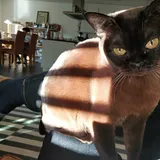
Burmese
It occurs naturally on the Malay Peninsula; most of today’s Burmese trace back to one female, Wong Mau, brought to America in 1930. The Cat Fanciers’ Association describes its personality as “People oriented, affectionate”.
- Coat length
- Shorthair
- Grooming
- Low
- Shedding
- Low
- Size
- Medium
- Adult weight range
- 8–12 lb (3.6–5.4 kg)
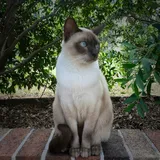
Tonkinese
Most Tonkinese descend from one cat, Wong Mau, who was also the foundation of the Burmese; the breed was first recognized in Canada, in 1960. The Cat Fanciers’ Association describes its personality as “Can be vocal, people oriented”.
- Coat length
- Shorthair
- Grooming
- Low
- Shedding
- Low
- Size
- Medium
- Adult weight range
- 6–12 lb (2.7–5.4 kg)
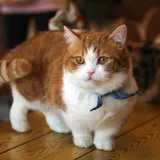
Munchkin
In 1983, Sandra Hockenedel found a pregnant short-legged female and named her Blackberry; she became the foundation of the breed.
- Coat length
- Longhair and shorthair varieties
- Grooming
- Source description · no scoreShorthair weekly, longhair twice a week
- Size
- Small
- Adult weight range
- 5–9 lb (2.3–4.1 kg)
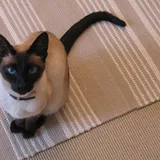
Siamese
It comes from Siam (now Thailand) and dates back to the 14th century; it was first documented in a Thai collection of cat poems written during the Ayutthaya period (1350–1767). The Cat Fanciers’ Association describes its personality as “Vocal, affectionate, active; can be insistent”.
- Coat length
- Shorthair
- Grooming
- Low
- Shedding
- Low
- Size
- Small
- Adult weight range
- 5–8 lb (2.3–3.6 kg)
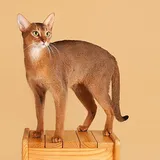
Abyssinian
Genetic research places the breed’s origin in the coastal areas of the Indian Ocean and in Southeast Asia; returning soldiers likely brought it to England. The Cat Fanciers’ Association describes its personality as “Busy, active, agenda-driven and affectionate”.
- Coat length
- Shorthair
- Grooming
- Low
- Shedding
- Low
- Size
- Small
- Adult weight range
- 8–10 lb (3.6–4.5 kg)
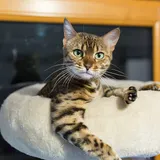
Bengal
It was developed by crossing the Asian leopard cat with domestic cats: from 1963, Jean Mill bred domestic cats with Asian leopard cats and added spotted domestic cats to create the breed. The Cat Fanciers’ Association describes its personality as “Curious and athletic”.
- Coat length
- Shorthair
- Grooming
- Low
- Shedding
- Low
- Size
- Medium
- Adult weight range
- 6–12 lb (2.7–5.4 kg)
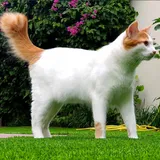
Turkish Van
It comes from the remote Lake Van area of Turkey; its modern history began in 1955, when two British photographers brought a pair back to England. The Cat Fanciers’ Association describes its personality as “Sweet and interested; enjoy water”.
- Coat length
- Longhair
- Grooming
- Low
- Shedding
- Low
- Size
- Medium
- Adult weight range
- 10–13 lb (4.5–5.9 kg)
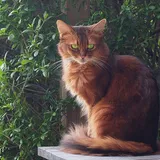
Somali
Long-haired kittens occasionally appeared in Abyssinian litters, and a few breeders began working with them; in the mid-1960s, Evelyn Mague named the developing breed “Somali”. The Cat Fanciers’ Association describes its personality as “Busy, active, agenda-driven and affectionate”.
- Coat length
- Longhair
- Grooming
- Low
- Shedding
- Minimal shedding, not zero
- Size
- Medium
- Adult weight range
- 6–12 lb (2.7–5.4 kg)
Maine Coon
Its roots lie in New England, where short-haired ship cats came ashore with the early settlers. The Cat Fanciers’ Association describes its personality as “Gentle, easy going yet active”.
- Coat length
- Longhair
- Grooming
- Moderate
- Shedding
- High
- Size
- Large
- Adult weight range
- 8–20 lb (3.6–9.1 kg)
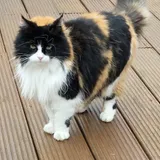
Norwegian Forest Cat
Its exact origins are unclear, but it is thought to have emerged from the forest some 4,000 years ago; in the 1970s, King Olaf named it the official cat of Norway. The Cat Fanciers’ Association describes its personality as “Active and sweet”.
- Coat length
- Longhair
- Grooming
- High
- Shedding
- High
- Size
- Large
- Adult weight range
- 12–22 lb (5.4–10 kg)
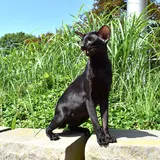
Oriental Shorthair
The breed began to be developed in Europe in the 1950s. The Cat Fanciers’ Association describes its personality as “Vocal, affectionate, active; can be insistent”.
- Coat length
- Longhair and shorthair varieties
- Grooming
- Source description · no scoreAbout every two weeks
- Size
- Not listed by the source
- Adult weight range
- Not listed by the source
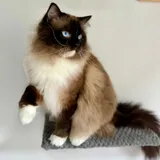
Ragdoll
It was developed in the 1960s by Ann Baker, a breeder in Riverside, California, from carefully chosen domestic longhairs; the foundation cat, Josephine, was a white longhair carrying the colorpoint gene. The Cat Fanciers’ Association describes its personality as “Docile, placid and affectionate”.
- Coat length
- Longhair
- Grooming
- Low
- Shedding
- Low
- Size
- Large
- Adult weight range
- 15–20 lb (6.8–9.1 kg)

British Shorthair
It originated in Great Britain and is considered a modern continuation of ancient Roman cats; it first drew public attention at cat shows at London’s Crystal Palace around the turn of the 20th century. The Cat Fanciers’ Association describes its personality as “Calm and quiet; enjoy people”.
- Coat length
- Shorthair
- Grooming
- High
- Shedding
- Moderate
- Size
- Medium
- Adult weight range
- 6–12 lb (2.7–5.4 kg)
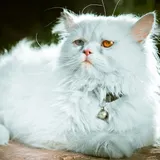
Persian
Its name comes from its presumed country of origin, Persia, but how it reached western Europe is not known precisely; when the Cat Fanciers’ Association was founded in 1906, it was one of the six foundation breeds. The Cat Fanciers’ Association describes its personality as “Sweet, affectionate, quiet”.
- Coat length
- Longhair
- Grooming
- High
- Shedding
- High
- Size
- Medium
- Adult weight range
- 7–12 lb (3.2–5.4 kg)
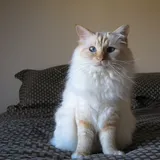
Birman
Its true history is uncertain; around 1919, a breeding pair was shipped from Burma to France, and the female, who arrived pregnant, became the foundation of the breed there. The Cat Fanciers’ Association describes its personality as “Sweet and affectionate”.
- Coat length
- Longhair
- Grooming
- Low
- Shedding
- Low
- Size
- Medium
- Adult weight range
- 6–15 lb (2.7–6.8 kg)

Exotic Shorthair
In the 1950s, several Persian breeders on the U.S. West Coast crossed their cats with American Shorthairs, which led to this breed. The Cat Fanciers’ Association describes its personality as “Sweet, affectionate, quiet”.
- Coat length
- Longhair and shorthair varieties
- Grooming
- Moderate
- Shedding
- Moderate
- Size
- Medium
- Adult weight range
- 9–12 lb (4.1–5.4 kg)
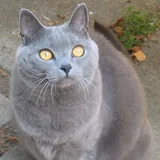
Chartreux
Literature mentions the blue cats of France as early as the 16th century; selective breeding began in France in the 1920s, drawing on natural colonies of French blue cats. The Cat Fanciers’ Association describes its personality as “Even-tempered and adaptable”.
- Coat length
- Shorthair
- Grooming
- High
- Shedding
- High
- Size
- Medium
- Adult weight range
- 6–14 lb (2.7–6.4 kg)
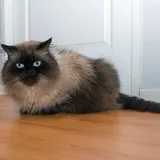
Himalayan
Breeders developed it by crossing Persians with Siamese; since 1984, the Cat Fanciers’ Association has classed it as a division of the Persian breed. The Cat Fanciers’ Association describes its personality as “Sweet, affectionate, quiet”.
- Coat length
- Longhair
- Grooming
- High
- Shedding
- High
- Size
- Medium
- Adult weight range
- 9–12 lb (4.1–5.4 kg)
About the cat breed comparison table
Compare everyday living needs
Each breed has sourced references for coat length and the personality line from the CFA breed overview, plus VCA breed-profile weight, lifespan and 1–5 scores for grooming, shedding, chattiness and lap-cat tendency. Use these categories to identify what to confirm, not to rank household suitability.
Search breeds and daily needs
Search breed names and coat or grooming references. Size follows the upper end of the source weight range and shedding follows the source score; both are explained next to each entry. There is no energy filter because the sources do not score activity level. Breeds without a VCA profile show coat and grooming from TICA only.
Reference only, not a placement decision
This guide is not veterinary advice, allergy diagnosis, a breeder or adoption endorsement, or a guarantee of temperament, health, low-allergen traits, lifespan, legality, or suitability. No cat is guaranteed hypoallergenic. Confirm individual behavior, allergy response, health history, and local rules before choosing a cat.
FAQ
Common questions and answers about this topic.
What is Family Cat Breed Guide?
A sourced reference for 27 cat breeds with size and shedding filters, coat length, grooming, chattiness, lap-cat tendency, weight, lifespan and source review dates. It does not score family suitability, allergy safety or an individual cat's health.
Is Family Cat Breed Guide free to use?
Yes, Family Cat Breed Guide is completely free to use.
Data Sources
This tool's data is compiled from the authoritative sources below.
- CFA - Breeds(opens in a new tab)
- VCA Animal Hospitals - Cat Breeds(opens in a new tab)
- TICA - Browse All Breeds(opens in a new tab)
Data last maintained